
MemeMix Challenge: Funny Party
Amobear VN Game GlobalCasual
4.359.00 Reviews
- Version
- 0.0.9
- Installs
- 5.00M
- Age Rating
- Everyone
Screenshots
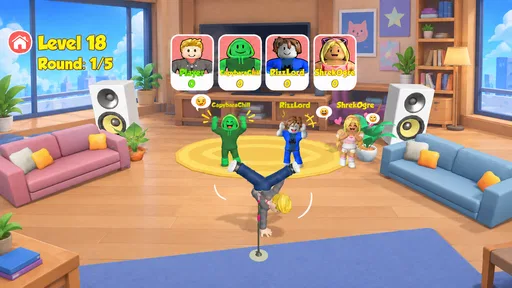
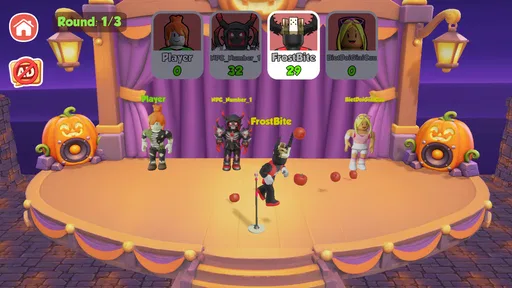
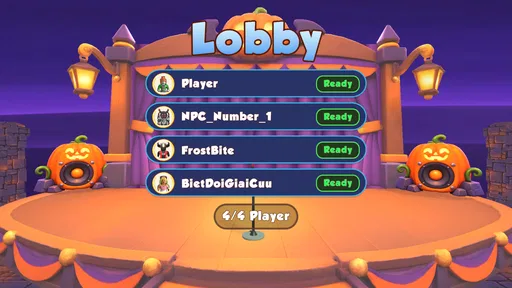
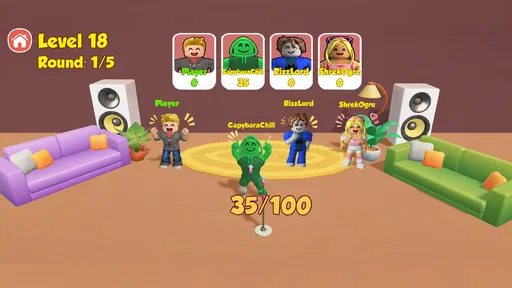
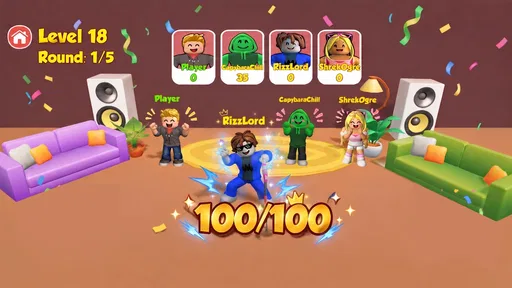
Our Review of MemeMix Challenge: Funny Party
 Analysis by Appyee
I would treat MemeMix Challenge: Funny Party as a quick social game, not as a replacement for a deep single-player title. Its appeal is easy to understand: make a funny sound, let the game score the attempt, and bring friends into the challenge. That simple loop is best suited to a relaxed gathering where people are happy to be a little silly. If you want thoughtful strategy, a long campaign, or a quiet game to play alone, I would look elsewhere.
What matters before you choose it
The first question is whether you enjoy performing as much as playing. A sound-mimic challenge puts the player’s voice and sense of humor front and center, so the fun depends partly on being comfortable trying something out loud. I would be more inclined to start it with friends who are already joking around than to hand it to a reserved guest and expect an instant hit.
It is a casual game from Amobear VN Game Global, and its premise makes it most useful in short bursts. Think of the gap between ordering food and its arrival, a slow moment at a small get-together, or a family visit where nobody wants to commit to a complicated ruleset. The game gives people a shared prompt and a reason to react; it does not require the kind of sustained attention that a strategy game demands.
The app is free to download, with in-app purchases priced at $1.99 per item. That makes trying it a relatively low-commitment decision, but I would still check purchase controls before passing a phone to children. Its Everyone content rating makes it broadly approachable, while the existence of paid items is a separate practical consideration for a family device.
Its average rating is 4.3 from around 3,500 ratings, and it has passed 5 million installs. Those figures suggest that the idea has found an audience, but they cannot tell you whether your particular group will enjoy performing sounds. I would use them as a reason to consider a try, not as proof that every session will work.
The appeal is the room, not just the screen
The strongest use case is a group that can turn an imperfect attempt into a joke. A polished imitation might be satisfying, but an unexpectedly odd one can be even funnier when everyone understands what the player was trying to do. That makes the game well suited to casual gatherings, especially when people want an activity that gives conversation a nudge rather than taking over the whole evening.
A realistic way to use it is to bring it out after a meal when the conversation has slowed. I would suggest one person try a round first, so everyone understands the basic idea without putting a hesitant player on the spot. Then let the group decide whether to take turns. That small bit of social pacing matters: a party game can feel welcoming when participation is optional, and awkward when someone is pressured to perform.
The best reason to choose it is that it turns listening and imitation into a shared joke. Unlike a conventional quiz, the entertainment is not only in getting an answer right; the attempt itself is part of the moment. That makes it a better fit for a playful group than for people who mainly want a test of knowledge or a competitive game with a serious skill curve.
How to make a session work better
I would keep the first session short and treat the scoring as a prompt for conversation rather than a definitive judgment of who is funniest. Scores can give a group something to react to, but the social mood is more important than chasing a perfect result. If one player gets a result that becomes the highlight, let the group enjoy it instead of immediately restarting to improve it.
A useful hosting trick is to set a simple turn-taking order before starting. In a noisy room, people may talk over one another, and a game based on sound imitation needs a little space for each attempt to land. Taking turns also prevents the most outgoing person from accidentally dominating the activity. For a smaller group, I would keep the phone close enough for everyone to hear and see the result without making a big production of it.
Another practical consideration is the setting. The idea works naturally in a living room or at a table where people can hear one another; it is less appealing in a quiet public place or anywhere players would feel self-conscious about making noises. If you are deciding whether to start a session, ask whether the group is in a mood to perform. The same game can feel lively with friends and uncomfortable in a formal or subdued setting.
The game is free, but paid items mean it is sensible to agree on a no-purchase expectation if children are playing. I would also avoid making an in-app purchase the center of the decision: the core question is whether the sound-challenge format suits the group. If it does, the free entry point is a convenient way to find out; if it does not, spending more is unlikely to fix the mismatch.
Where it stands against other casual games
Compared with word games or trivia, this is a more expressive choice. Those alternatives tend to reward recall, vocabulary, or quick answers; this one asks players to make a sound and enjoy how the attempt comes across. Choose a quiz when your group prefers clear questions and answers. Choose a word game when people want something they can play quietly. Choose this when laughter and performance are more important than a conventional win.
It also differs from party games built around drawing or acting. Those formats may suit people who prefer visual creativity or gestures, while sound imitation naturally favors players who are willing to use their voice. I would not call one style universally better. The right alternative depends on what your group finds comfortable: if no one wants to make noises in front of others, a drawing game or a quiet puzzle is a kinder choice.
Against casual games designed mainly for solo play, the social focus is both its advantage and its limitation. A quick solo attempt may be possible, but the premise has more life when other people hear and respond. If you usually play during a commute, in a waiting room, or late at night with the sound off, a puzzle or a self-contained arcade game will likely serve you better.
What to expect from the app itself
The current version is 0.0.9, and the game requires Android 7.1 or later. I would check that requirement before installing on an older device. It is also worth thinking about the phone’s role during a gathering: if everyone is focused on one screen, the activity works best when the person holding it shares the prompt and result clearly, rather than letting the device become a barrier between the group.
Its release date is September 18, 2026. The modest version number is a reason for me to keep expectations measured, not to assume a particular problem or missing feature. I would approach it as a straightforward casual diversion and judge it by whether its central activity suits the people I plan to play with, rather than expecting the depth or variety of a long-established game with a very different purpose.
Switching away from it is easy in practical terms: there is little reason to build a routine around a short party game. The real cost is social, not technical. If the group has already settled into a different activity, opening another game may interrupt the flow. I would introduce it at a natural lull and stop when the jokes start to repeat; that is a better measure of a good session than trying to stretch the game across an entire evening.
One question a cautious player may have is whether it is appropriate for mixed ages. The Everyone rating points to broad suitability, and the simple premise is easy to explain, but I would still choose prompts and participation in a way that feels comfortable to the people present. Another likely question is whether the game is worth trying without paying: because it is free to download, a group can test whether it clicks before considering any paid items.
Who should pick it—and who should pass
I would recommend MemeMix Challenge: Funny Party to friends who like low-pressure group activities, families looking for a light shared distraction, and hosts who want a simple way to get people laughing between conversations. It is especially promising when the group enjoys playful imitation and does not mind a little performance. The developer, Amobear VN Game Global, has placed it in the casual space, and that is the right expectation: brief entertainment rather than a demanding game to master.
I would skip it if your group dislikes being heard, if you need a game that works silently, or if you want a carefully structured competitive experience. It is also not my first pick for someone seeking a substantial solo game. In those cases, a puzzle, trivia title, or another party format that does not center on sound imitation will be a more comfortable match.
My recommendation is to try it when there is already a friendly, playful group around—not as a guaranteed icebreaker for strangers. Keep purchases optional, make turns low-pressure, and let the reactions matter more than the score. If your friends enjoy the sound challenge, it can provide an easy burst of shared fun; if they would rather talk, draw, or solve puzzles, there are better casual alternatives for that particular room.
Privacy and Permissions
See what permissions an app requests and how it handles your data.
- Microphone
- record audio
- Wi-Fi connection information
- view Wi-Fi connections
- Other
- view network connections, pair with Bluetooth devices, full network access, change your audio settings, control vibration, prevent device from sleeping, Google Play license check
Verdict
Strengths of MemeMix Challenge: Funny Party
- Quick rounds make it easy to play during short breaks.
- Simple controls help new players join without a long tutorial.
- Funny prompts encourage creative responses and lively discussions.
- A party format works well for groups of friends.
- Replay value comes from trying different answers and reactions.
Limitations of MemeMix Challenge: Funny Party
- The humor may not appeal to every player.
- The experience is less enjoyable when played alone.
- Some prompts may feel repetitive after several sessions.
- Playing with others requires a group to be available.
- Players who dislike silly challenges may lose interest quickly.
Similar Picks in This Category
View All
My Talking Angela
Outfit7 Limited4.2

My Talking Tom
Outfit7 Limited4.3

Pou
Zakeh4.2

My Talking Tom 2: Pet Game
Outfit7 Limited4.3

Candy Crush Saga
King4.6

Bridge Race
Supersonic Studios LTD4.1
Frequently Asked Questions
What is MemeMix Challenge: Funny Party?
MemeMix Challenge: Funny Party is a casual party game built around meme-style humor and quick challenges. It is designed for lighthearted play, with short activities that can suit a group gathering or a few minutes of solo entertainment. The exact challenges, modes, and available content may vary by version, so check the store listing and in-game instructions before downloading.
Can I play MemeMix Challenge: Funny Party with friends?
The party-focused name suggests that the game is intended to be enjoyed socially, but the available multiplayer options can depend on the version and device. Check whether it supports local pass-and-play, online rooms, or another way to share a session before inviting friends. If you are playing together, review the prompts first, since meme humor and party challenges may not suit every group.
Is MemeMix Challenge: Funny Party free to download?
The cost and payment options depend on the app store and region. The game may be free to install while offering optional purchases, advertisements, or paid content, so review the current listing for pricing details before downloading. Also check whether purchases are required to access particular challenges or features, and use device-level purchase controls if children may play on your phone or tablet.
Does MemeMix Challenge: Funny Party need an internet connection?
Whether an internet connection is needed can depend on the game’s features and the version you install. Some party games let players use core content offline, while downloads, online play, ads, or updates may require connectivity. Before planning to play somewhere without reliable internet, check the store description and try launching the game while offline to confirm which features remain available.
Is MemeMix Challenge: Funny Party suitable for children?
Suitability depends on the game’s humor, prompts, advertisements, and any user-generated content, which may change with updates. A parent or guardian should check the age rating and read the store listing before allowing a child to play. It is also sensible to review the game together first, especially in a group setting, and to check privacy permissions and in-app purchase settings.
Play our best games!


